
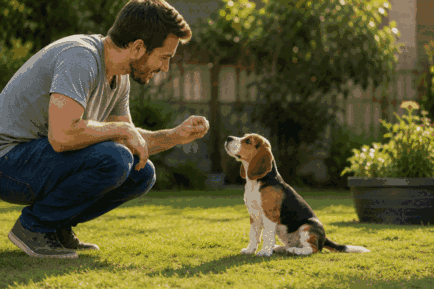
Golden Retrievers have a reputation as one of the easiest breeds to train, and for the most part, that reputation is deserved. But “easy to train” does not mean “trains itself,” and these golden retriever puppy training tips will help you avoid the gap between those two ideas.
This breed’s intelligence and eagerness to please give you a real head start. What you do with that head start in the first few months makes a bigger difference than most new owners expect.
Quick answer: Start training the day your puppy comes home, ideally around 8 weeks old, using positive reinforcement and short, consistent sessions. Focus first on name recognition, sit, come, and drop it, and prioritize socialization from the very beginning rather than waiting for vaccinations to finish.
When to Start Training Your Golden Retriever Puppy
There is no reason to wait. Basic commands like sit, come, and name recognition can realistically start as early as 8 weeks old, right when most puppies come home. Puppies are especially receptive to learning during these early weeks, and early training also helps prevent bad habits from forming in the first place.
That said, keep expectations realistic for day one. Your puppy just left everything familiar behind, and the first day home is often more about helping them feel safe than teaching commands. Formal training can genuinely start the next day or two, once the initial shock of a new environment has settled a bit.
Why Golden Retrievers Are Considered Easy to Train
Golden Retrievers combine high intelligence with a strong desire to please, which is a genuinely useful combination for training. Add in their famous food motivation, and you have a breed that responds quickly to reward-based methods.
That reputation for trainability can create a false sense of security, though. A smart, food-motivated puppy still needs consistency, repetition, and patience. Skipping the basics because “Goldens are easy” is one of the most common mistakes first-time owners make with this breed.
Core Commands to Teach First
A handful of commands cover most of what a young Golden Retriever puppy needs for safety and manners, and these form the backbone of nearly every set of golden retriever puppy training tips worth following.
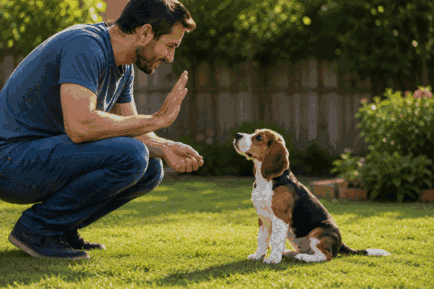
- Name recognition: The foundation everything else builds on
- Sit: Usually one of the fastest commands for this breed to pick up
- Come: Essential for safety around doors, yards, and busy areas
- Drop it: Especially important for retrievers, who are naturally inclined to pick things up in their mouths
- Stay: Builds impulse control, which balances out this breed’s enthusiasm
“Drop it” deserves special attention here. Golden Retrievers were bred to carry things in their mouths, and that instinct shows up constantly, sometimes with objects you would really rather they not have.
Positive Reinforcement: Why It Is the Only Approach Worth Using
Golden Retrievers respond best to reward-based training, and this is not just a preference, it is the method with the strongest track record for this breed. The American Veterinary Medical Association recommends reward-based training over punishment-based methods across the board, since it improves learning outcomes and avoids the fear or mistrust that harsher corrections can create.
Use small, low-calorie treats, praise, and play as rewards, and keep sessions short, around 5 to 10 minutes, a few times a day. Golden Retriever puppies lose focus quickly despite their eagerness, and ending on a high note works far better than pushing until they check out.
Socialization: The Non-Negotiable Early Step
The socialization window for this breed runs roughly 3 to 16 weeks old, and it is arguably just as important as any command you will teach. Puppies exposed to a wide range of people, sounds, and safe environments during this window tend to grow into calmer, more confident adult dogs.
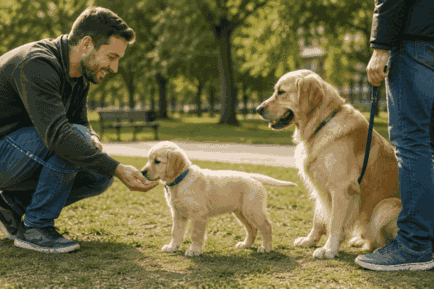
Waiting for full vaccination before starting socialization creates a real gap during the most critical learning period. Safe options before your puppy’s shots are complete include home visitors, a private yard, car rides, and calm, healthy dogs in controlled settings, while avoiding higher-risk public spaces like dog parks.
Managing the Mouthy Retriever Instinct
Like other retriever breeds, Golden Retriever puppies are naturally prone to mouthing and carrying objects, which can come across as excessive biting during the teething months. This is instinct, not aggression, and it responds well to consistent redirection rather than punishment.
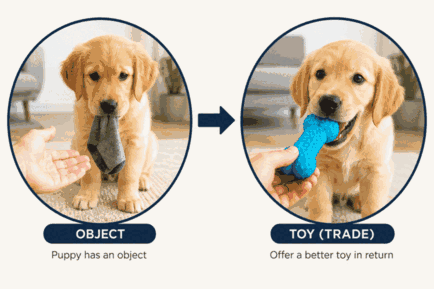
Keep appropriate chew toys within easy reach, and practice trading an object your puppy has for something better rather than pulling it away by force. If mouthing feels particularly intense, our Labrador Puppy Biting Phase guide covers a very similar retriever-driven pattern that applies well to Golden Retriever puppies too.
Daily Training Schedule for a First-Time Owner
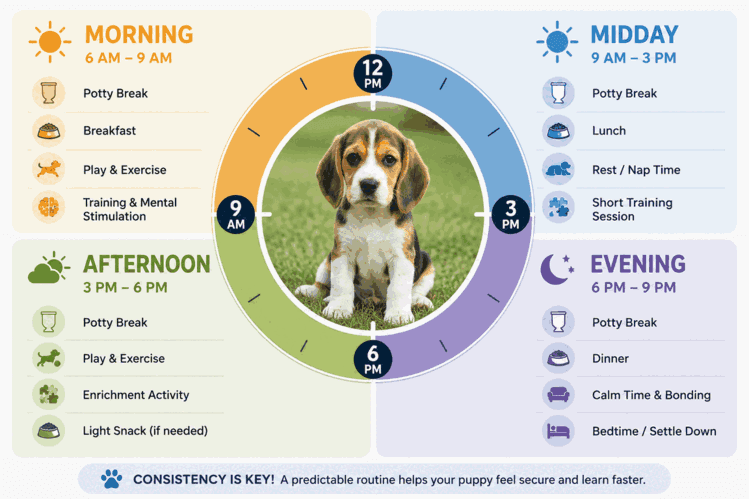
A simple daily rhythm makes training feel far less overwhelming during those first busy weeks.
| Time of Day | Focus |
|---|---|
| Morning | Potty break, short training session (5-10 min) |
| Midday | Crate time, mental enrichment or puzzle feeding |
| Afternoon | Second short training session, socialization exposure |
| Evening | Calm play, gentle handling practice, final potty break |
Common First-Time Owner Mistakes
A few mistakes come up repeatedly with new Golden Retriever owners, and avoiding them is often the single biggest factor separating smooth golden retriever puppy training tips success stories from frustrating ones.
- Assuming the breed trains itself. Intelligence and eagerness still need structure and consistency to turn into reliable behavior.
- Skipping “drop it” training. This command matters more for retrievers than almost any other breed.
- Inconsistent household rules. Everyone needs to use the same commands and boundaries.
- Overwhelming socialization. Too many new experiences packed into one day can backfire.
- Sessions that run too long. Short and frequent works better than long and drawn out, even for a food-motivated breed.
- Relying on punishment. This tends to damage trust rather than improve behavior in a breed this sensitive to their owner’s mood.
How Training Ties Into Managing Energy
Golden Retrievers were bred as working gun dogs, and mental engagement matters just as much as physical activity for keeping this breed settled. Training sessions genuinely tire out a Golden Retriever puppy’s brain in a way that exercise alone cannot always match.
Our Dog Exercise Routine Guide covers how much daily physical activity is appropriate as your puppy grows, which pairs well with the mental work covered in this training guide.
When to Consider Professional Training Help
Most first-time owners can handle basic obedience with patience and consistency, especially with a breed this responsive. A few situations are worth bringing in a professional trainer.
- Fear-based behavior that is not improving with gentle socialization
- Leash reactivity or persistent pulling despite consistent practice
- Mouthing or chewing that feels excessive even with redirection
- Training that feels overwhelming despite genuine, consistent effort
The American Kennel Club notes that the first year, and especially the first several months, sets the foundation for a Golden Retriever’s behavior for the rest of their life, which is exactly why getting professional guidance early is worth considering if you feel stuck rather than waiting for problems to resolve on their own.
Golden Retriever Puppy Training Tips: Frequently Asked Questions
What age should I start training my Golden Retriever puppy?
This is one of the most common golden retriever puppy training tips questions new owners have, and the answer is as early as 8 weeks old, right when most puppies come home. There is no need to wait for vaccinations to be complete for basic obedience and socialization.
Are Golden Retrievers really easy to train?
Generally yes, thanks to their intelligence and eagerness to please, but they still need consistent, structured training rather than assuming good behavior will develop on its own.
Why is “drop it” such an important command for Golden Retrievers?
This breed was bred to carry objects in their mouths, so they are naturally more likely than many breeds to pick up things you would rather they not have.
How long should training sessions be for a Golden Retriever puppy?
Keep sessions short, around 5 to 10 minutes, a few times a day. This breed loses focus quickly despite their enthusiasm, so shorter, frequent sessions work better than long ones.
Do Golden Retriever puppies need professional training?
Not necessarily, though many first-time owners benefit from guidance, especially if training feels overwhelming or specific behaviors are not improving with consistent effort.
Can training help with my Golden Retriever’s high energy?
Yes. Mental stimulation from training tires out this working breed’s brain in a way that physical exercise alone often cannot, and it tends to result in a calmer dog overall.
Final Takeaway
These golden retriever puppy training tips come down to a few core habits: start early, keep sessions short and positive, prioritize socialization, and never underestimate this breed’s need for “drop it” specifically. Golden Retrievers genuinely want to work with you, and the right foundation now pays off for the rest of their life.
If you are also tracking your puppy’s physical growth and coat development alongside training, our Golden Retriever Puppy Growth Chart and When Does a Golden Retriever Puppy Start Shedding? guides round out the rest of your puppy’s first year. For families weighing this breed against others, our Best Dog Breeds for Families guide is a useful comparison, along with our complete Golden Retriever Puppy: Complete First-Year Guide.
Author Bio
David Jason is the founder of My Pet Care Tips and writes practical, research based guides to help pet owners raise healthier, happier dogs and cats. His content focuses on clear, beginner friendly advice backed by trusted veterinary resources and real world pet care best practices.