
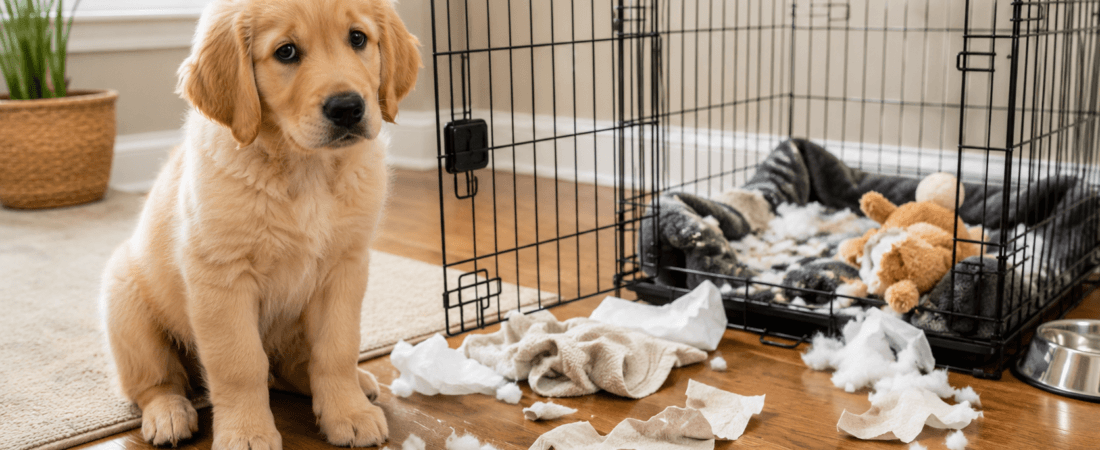
Finding a mess in the crate first thing in the morning is one of the most frustrating parts of raising a young puppy, especially after weeks of what felt like real progress. If you are asking why is my puppy pooping in the crate at night, you are far from alone. Nighttime crate accidents are extremely common in young puppies, and they almost always trace back to a specific, fixable cause rather than a training failure or a stubborn streak.
This guide walks through the most common reasons puppies poop in the crate overnight, practical fixes for each one, a nighttime schedule by age, and the signs that mean it is time to call a vet instead of adjusting the routine. By the end, you should have a clear sense of what is normal for your puppy’s age and what steps actually move the needle. Our guides on signs your puppy needs to go potty and puppy potty training mistakes and puppy potty training regression cover related ground if daytime accidents are also part of the picture.
Is It Normal for Puppies to Poop in the Crate at Night?
In most cases, yes. Young puppies have limited bowel control, and nighttime is the longest stretch most puppies go without a bathroom break all day. Several factors affect how quickly a puppy grows out of this stage, and understanding them helps explain why is my puppy pooping in the crate at night without jumping straight to worst-case conclusions.
Age matters more than almost anything else. A very young puppy simply does not have the physical development yet to hold it for eight hours straight, no matter how consistent the training has been. Breed size matters too, since smaller breeds often have smaller bladders and faster digestion relative to their size, while larger breeds sometimes take a bit longer to mature even though their capacity is bigger. Routine matters just as much as biology, since a puppy fed and exercised inconsistently will struggle even after its body is technically ready.
The American Kennel Club (AKC) notes that consistent daily routines are one of the most reliable ways to reduce nighttime accidents across breeds, since predictability helps a puppy’s digestive system settle into a rhythm.
There is a difference between normal accidents and something abnormal. Occasional nighttime accidents in a puppy under 4 months old are expected. Frequent accidents in an older puppy that was previously reliable, or accidents paired with diarrhea, straining, or lethargy, point toward something else going on, which the medical section further down covers in detail.
Why Is My Puppy Pooping in the Crate at Night?
There are 11 common reasons behind this, ranging from simple biology to routine mistakes to, occasionally, something medical.
1. Your Puppy Is Too Young to Hold It Overnight
This is the most common answer to why is my puppy pooping in the crate at night, especially for puppies under 12 weeks old. At 8 weeks, most puppies cannot make it through a full night, and expecting otherwise sets everyone up for frustration. By 10 to 12 weeks, control starts improving noticeably as the digestive and muscular systems mature. By 16 weeks, most puppies can comfortably hold it through a typical night with a solid bedtime routine, though individual puppies vary and smaller breeds sometimes take a little longer.
2. Feeding Too Close to Bedtime
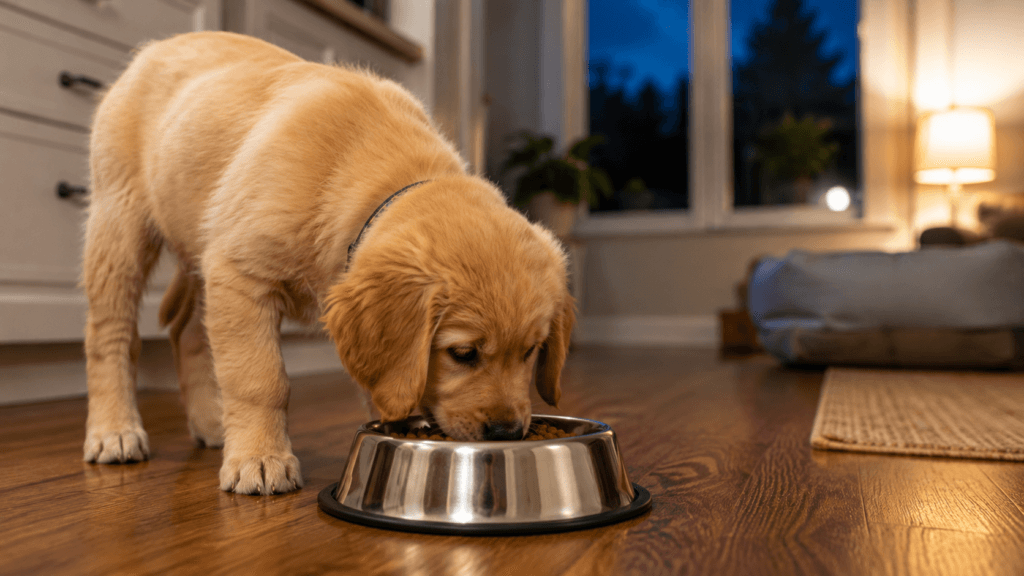
Digestion timing matters more than most owners expect. Food eaten too close to bedtime is often still moving through the digestive system overnight, which increases the odds of an accident regardless of how good the rest of the routine is. Shifting the last meal earlier, ideally two to three hours before crate time, gives digestion enough of a head start to mostly finish before the puppy settles in for the night.
3. Not Enough Potty Breaks Before Bed
A weak evening routine is one of the easiest problems to fix, and one of the most common. Skipping the final potty trip, or rushing it because everyone is tired and ready for bed, leaves a puppy going into a long overnight stretch without a truly empty bladder or bowel. Learning to spot signs your puppy needs to go potty in the evening specifically, not just during the day, closes this gap quickly and often produces results within a few nights.
4. Crate Is Too Large
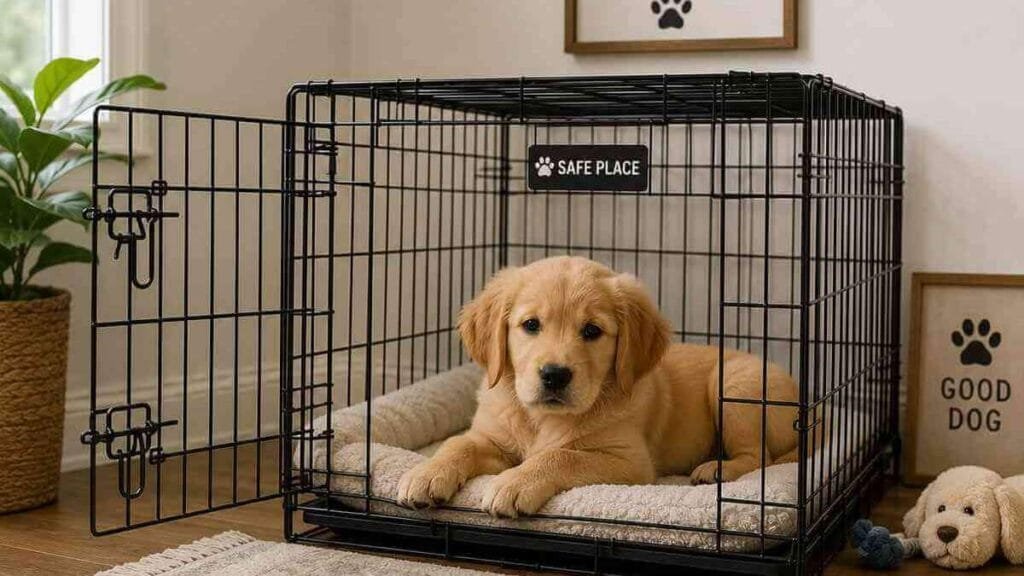
Most dogs instinctively avoid soiling the space they sleep in, but that instinct only works if the crate is sized correctly. An oversized crate gives a puppy enough room to use one corner as a bathroom while still sleeping comfortably in the other, which defeats the entire purpose of the crate. The Animal Humane Society points to correctly sized crates, ones that allow a puppy to stand, turn, and lie down but not much more, as one of the simplest fixes for this exact pattern.
5. Inconsistent Potty Training
Routine mistakes during the day often show up as nighttime accidents too, since the underlying habits have not fully formed yet. This overlaps heavily with common puppy potty training mistakes, so fixing daytime consistency usually improves nighttime results as well.
6. Stress or Separation Anxiety
A recent move, a new family member, or general anxiety can disrupt a puppy’s digestion and sleep, leading to accidents that were not happening before. If accidents show up specifically when a puppy is left alone rather than every night, it is worth reading about dog separation anxiety, since the underlying cause and the fix are different from a simple bladder issue.
7. Digestive Upset or Diet Changes
New treats, a recent food switch, or a sensitive stomach can all lead to looser stool that is harder for a puppy to hold overnight, even one that is otherwise fully capable.
8. Medical Problems
Parasites, diarrhea, infections, and other digestive issues can all cause nighttime accidents that have nothing to do with training. VCA Animal Hospitals lists intestinal parasites and dietary indiscretion among the more common causes of loose stool in young puppies, both of which can look like a training setback at first glance. Our guide to common pet health problems covers several of the underlying causes worth ruling out if accidents keep happening despite a solid routine.
9. Lack of Daily Exercise
Regular activity supports healthy digestion. A puppy that gets little movement during the day may have a slower, less predictable digestive rhythm, which makes nighttime timing harder to plan around.
10. Too Much Freedom Before Bed
Unsupervised time right before crate time gives a puppy more opportunities to snack, drink, or get worked up right before being expected to settle and hold it overnight.
11. Incorrect Crate Training
If a puppy was rushed into long stretches in the crate before building a positive association with it, stress alone can trigger accidents. Our how to train a puppy at home for beginners guide covers how to build that association correctly from the start.
How to Stop Your Puppy from Pooping in the Crate at Night
Once the likely cause is narrowed down, most fixes are simple and build directly off the daily basics covered in our how to train a puppy at home for beginners and how to take care of a puppy guides.
Create a Bedtime Potty Routine
A predictable sequence of wind-down, final meal, play, and potty break, done in the same order each night, helps a puppy’s body settle into a rhythm.
Feed Dinner Earlier
Moving the last meal two to three hours before bedtime gives digestion enough time to mostly finish before crate time.
Limit Treats Before Bedtime
Extra treats late in the evening add unplanned digestion right when you want things to be winding down, not starting up.
Take One Final Potty Trip
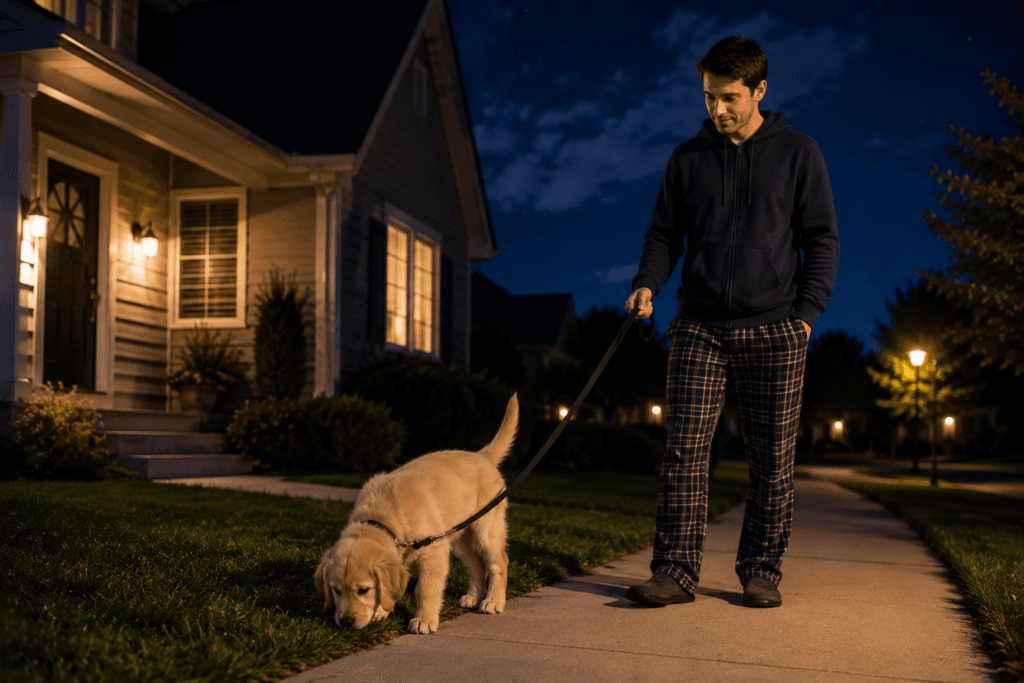
Right before crate time, not right after the last meal, gives the best chance of an empty bladder and bowel overnight.
Use the Correct Crate Size
A crate sized for a puppy to stand, turn around, and lie down comfortably, without extra room to spare, supports the instinct to keep the sleeping area clean.
Reward Outdoor Potty Success
Immediate praise or a small treat after a successful outdoor bathroom break, especially the last one before bed, reinforces the habit you actually want.
Keep a Consistent Schedule
The same wake time, meal times, and bedtime every day, weekends included, builds a body clock a puppy can actually rely on.
Puppy Nighttime Potty Schedule by Age
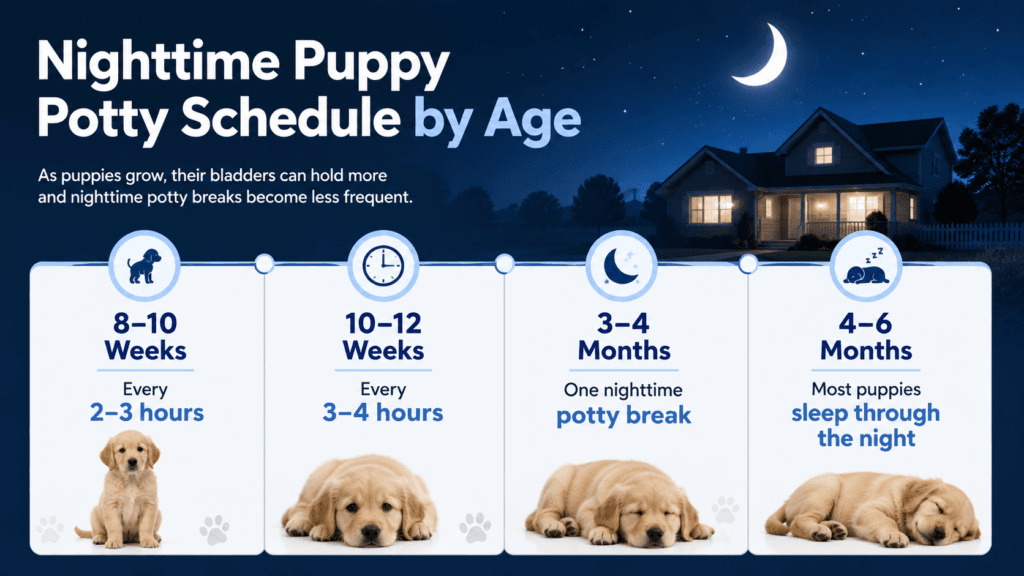
| Age | Night Potty Frequency | Expected Bladder/Bowel Control |
|---|---|---|
| 8 weeks | Every 2 to 3 hours | Very limited, frequent accidents expected |
| 10 weeks | Every 3 to 4 hours | Improving, occasional accidents still normal |
| 12 weeks | Every 4 to 5 hours | Noticeably better with a solid routine |
| 16 weeks | Once, if needed | Approaching a full night for many puppies |
| 5 to 6 months | Rarely needed | Most puppies can comfortably sleep through |
When Should You Call a Veterinarian?
Most nighttime crate accidents are a normal part of puppyhood, but a few signs point to something that needs medical attention rather than a routine adjustment. The ASPCA recommends treating sudden, unexplained changes in bathroom habits as a reason to check in with a vet rather than waiting to see if a routine adjustment fixes things on its own.

Watch for:
- Blood in stool
- Diarrhea that does not resolve within a day or two
- Vomiting alongside accidents
- Sudden accidents in a puppy that was previously reliable
- Unexplained weight loss
- Loss of appetite
Any of these, especially in combination, are worth a same-day check rather than waiting to see if the routine fixes itself. Our pet emergency signs guide covers which symptoms count as urgent versus which can reasonably wait for a regular appointment. A quick call to your vet’s office can also help you decide whether a visit is truly needed or whether a few adjustments at home are enough for now.
Common Mistakes Owners Make
A few habits quietly work against progress, even with good intentions. If you keep asking why is my puppy pooping in the crate at night despite a routine that seems reasonable, one of these is often the missing piece:
- Feeding late, which leaves digestion unfinished at bedtime
- Using an oversized crate, which removes the natural incentive to stay clean
- Punishing accidents, which adds stress without teaching anything useful
- Skipping evening walks, which affects digestion and settling
- Ignoring potty signals, especially in the hour before bed
- Keeping an inconsistent routine, which makes any progress harder to build on
Most of these mirror the broader list of puppy potty training mistakes that slow down house training in general, so fixing them here tends to help daytime accidents too. Even correcting just one or two of these habits often produces a noticeable change within a week or two.
Frequently Asked Questions
Why is my puppy pooping in the crate at night?
Most often it comes down to age and limited bowel control, though feeding timing, an oversized crate, inconsistent routine, or occasionally a medical issue can all contribute.
What age do puppies stop pooping at night?
Many puppies show real improvement by 12 to 16 weeks, with most able to comfortably hold it through the night by 5 to 6 months, depending on breed size and routine.
How do I stop my puppy from pooping at night?
Adjust feeding time, add a final potty trip right before bed, use a correctly sized crate, and keep the evening routine consistent every night.
Is it normal for an 8-week-old puppy to poop in the crate?
Yes. At 8 weeks, most puppies cannot physically hold it through a full night, so occasional accidents are expected rather than a sign of a problem.
Why is my house-trained dog suddenly pooping in the crate?
A sudden change after a period of reliability often points to stress, a diet change, or a medical issue rather than a training lapse, and is worth investigating rather than ignoring.
Can separation anxiety cause crate accidents?
Yes. Anxiety can disrupt digestion and sleep, leading to accidents that look identical to a bladder or bowel control issue but need a different kind of fix.
Should I wake my puppy up to poop at night?
For very young puppies, a scheduled middle-of-the-night wake-up can prevent accidents until natural control catches up, then can be phased out as the puppy grows.
Does crate size affect potty accidents?
Yes, significantly. A crate that is too large removes the natural instinct to avoid soiling the sleeping area, making accidents more likely even in an otherwise well-trained puppy.
Final Thoughts
Finding the root cause is the fastest way to stop nighttime crate accidents for good. Whether the answer to why is my puppy pooping in the crate at night turns out to be age, feeding timing, crate size, or something else on this list, the fix is usually more straightforward than it feels at 2 a.m. Stay consistent with the routine, avoid punishment, and give the process a little time to work. Most puppies outgrow nighttime crate accidents naturally with proper training and a routine they can count on.
Written by David Jason Founder of My Pet Care Tips
David has spent years helping first-time puppy owners build reliable routines for house training, crate training, and daily care, drawing on real-world experience and trusted veterinary guidance to make the process less overwhelming.
Last Updated: July 28, 2026 Sources: American Kennel Club (AKC), VCA Animal Hospitals, Animal Humane Society, ASPCA
Note: Sudden or unexplained changes in bathroom habits always warrant a veterinary check to rule out an underlying medical cause.