
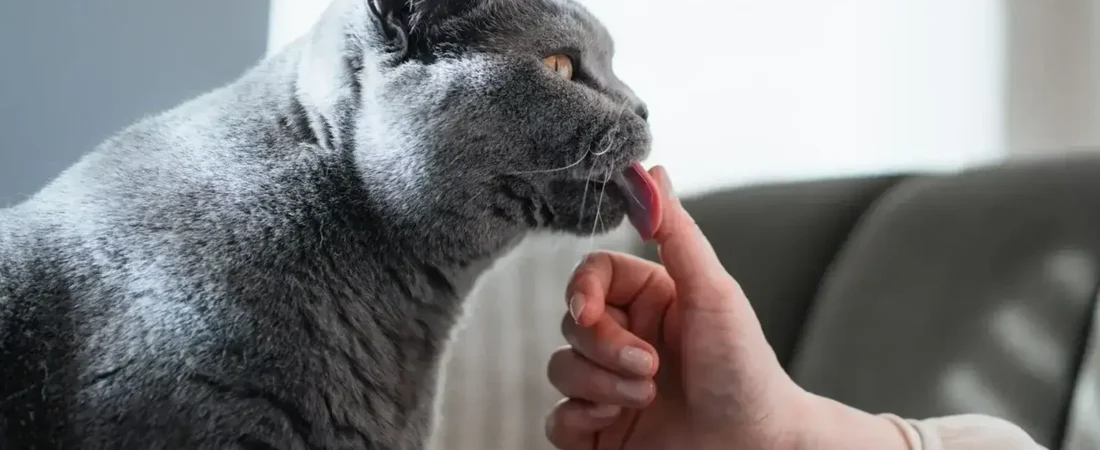
Your cat is curled up next to you, licking your hand with slow, affectionate strokes. Then, out of nowhere, a gentle bite. You’re left wondering what just happened. If you’ve asked yourself why do cats lick you then bite you, you’re describing one of the most common and most confusing cat behaviors there is.
The short answer is that this combination usually isn’t aggression at all. It’s your cat’s own language, and most of the time, it’s actually a compliment.
Quick Answer
Cats lick then bite for a mix of reasons, and most of them are harmless. It’s often a love bite, a form of grooming, a play invitation, or a sign that petting has gone on a little too long. Occasionally it points to stress or discomfort. Watching your cat’s body language is the best way to tell which one is happening.
Why Do Cats Lick You Then Bite You?
This pattern shows up in nearly every cat owner’s life at some point. Whether you’re wondering why do cats bite then lick you, why do cats bite and then lick you, or why do cats lick you and then bite you, the underlying explanation is usually the same. It comes down to grooming instinct, sensory overload, or a simple invitation to play.
Cats communicate mostly through body language and touch, not words. Licking and biting are both part of that toolkit, and when combined, they carry a specific message depending on the context.
9 Reasons Your Cat Licks You Then Bites You
1. It’s a Love Bite
A soft, controlled bite after licking is often exactly what it sounds like, a sign of affection. Cats have full control over their bite strength, and choosing a gentle nip instead of a hard one shows trust rather than aggression.
2. Your Cat Is Grooming You
Cats groom each other as a bonding ritual called allogrooming, which often includes small nibbles along with licking. When your cat does this to you, they’re treating you the way they’d treat another cat in their family group.
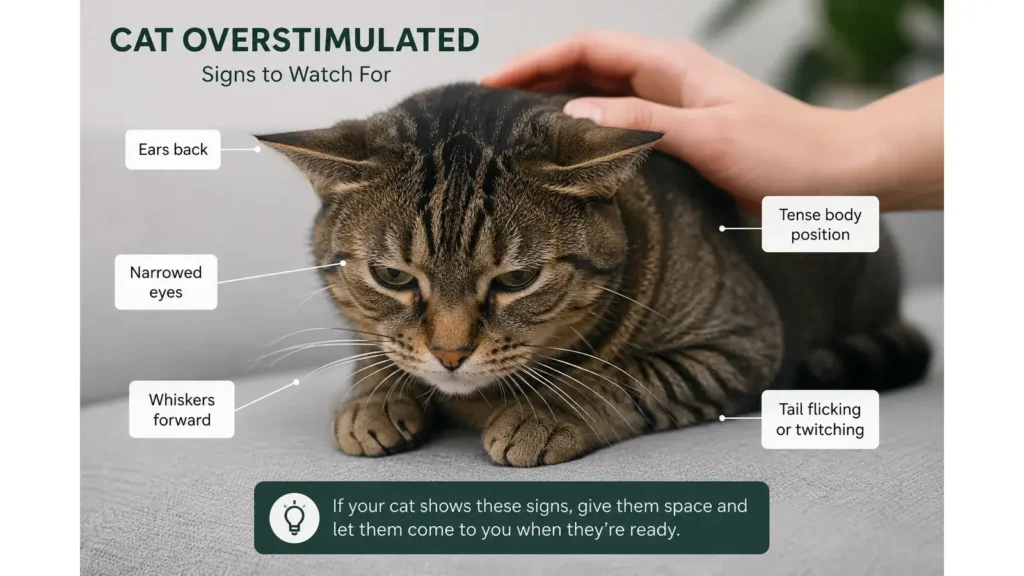
3. Petting Has Become Too Much (Overstimulation)
Sometimes the bite is a polite way of saying “that’s enough.” Watch for these early warning signs before the bite happens:
- Tail flicking
- Flattened ears
- Skin twitching along the back
Once you notice these cues, it’s a good time to pause the petting session.
4. Your Cat Wants to Play
A lick followed by a quick bite and a dart away is often a playful invitation. This is especially common in younger cats who are still practicing hunting and social skills through play.
5. Hunting Instinct
Licking mimics grooming, but biting taps into a cat’s natural predatory instinct. Even well fed indoor cats retain this instinct, and a lick that transitions into a bite can be a small burst of that hardwired behavior.
6. Seeking Your Attention
If your cat has learned that licking then biting gets a reaction from you, even a surprised one, they may repeat it simply to pull you into interaction.
7. Stress or Anxiety
Changes in routine, new pets, or unfamiliar visitors can make a cat feel unsettled. Licking can be self soothing, and the bite that follows may reflect built up tension rather than affection.
8. Learned Behavior
Owners sometimes unintentionally reward this pattern. If a gentle bite has ever been followed by laughter, petting, or a treat, your cat may have learned that it’s a reliable way to get a response.
9. Pain or Medical Problems
Occasional licking and biting is normal. But if it becomes frequent, intense, or suddenly appears out of nowhere, it’s worth ruling out a medical cause with your vet.
Why Does My Cat Lick Me Then Bite Me While Purring?
This combination usually means your cat is genuinely happy and relaxed, at least at first. Purring reflects contentment, and the licking is a sign of trust. But cats can purr even when mildly overstimulated, so the follow up bite may simply mean the good feeling tipped over into too much sensation. This overlaps with the trust based bonding seen in Signs Your Cat Actually Loves You.
Why Do Cats Lick You Then Bite You Gently?
A gentle bite after licking is almost always a love bite rather than a warning. The table below breaks down the difference so you can tell them apart quickly.
| Gentle Bite | Aggressive Bite |
| No pain | Painful |
| Relaxed body | Tense body |
| No hissing | Hissing |
| Wants attention | Wants space |
If your cat’s bite consistently falls into the “gentle” column, there’s usually nothing to worry about.
Why Do Cats Lick Your Hand Then Bite It?
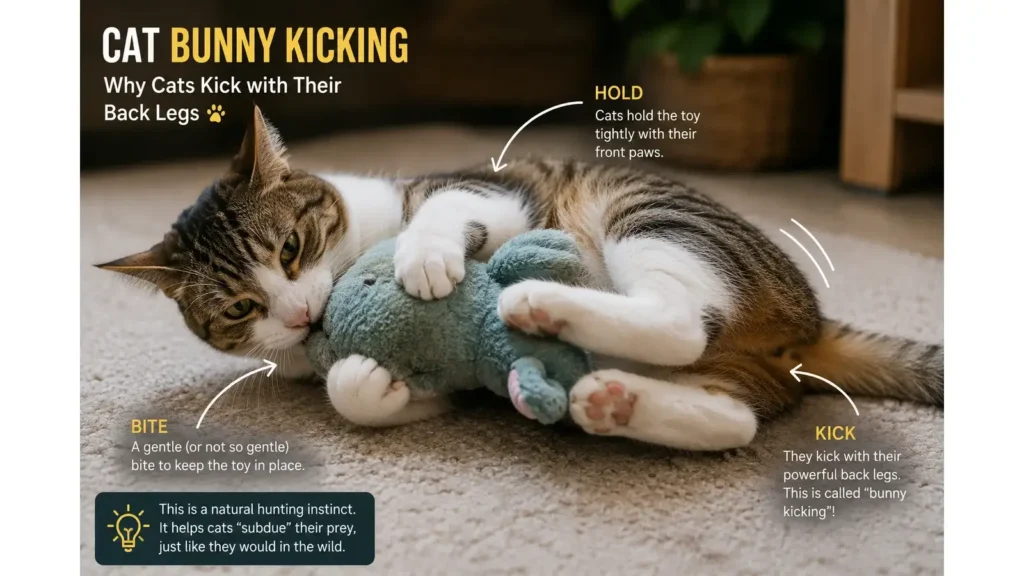
This often comes with a move called bunny kicking, where your cat grabs your hand or arm with their front paws and kicks with their back legs. It’s rooted in hunting play, the same motion cats use when subduing prey. It’s common during interactive play and isn’t usually a sign of real aggression, though it can leave scratches if hands are used instead of toys.
Is It Normal When Cats Lick You Then Bite You?
In most cases, it’s love, not aggression. Kittens often lick and nip as part of learning bite inhibition and play. Adult cats carry the same habit into affectionate moments with their favorite people. Senior cats may show it less often, or more gently, as energy levels change with age. Across all life stages, context and body language matter more than the behavior itself.
How to Stop Your Cat From Licking Then Biting
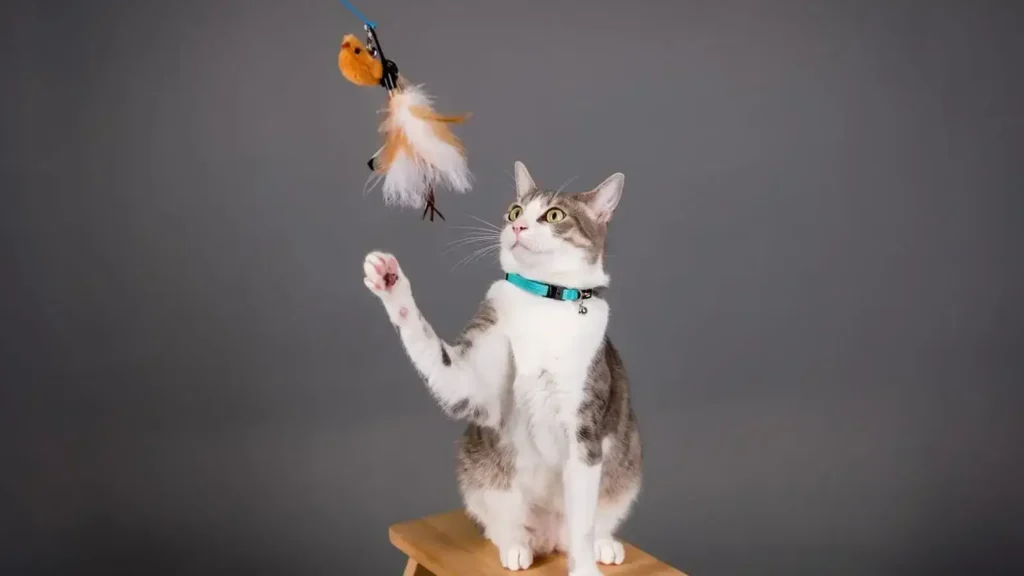
Stop Petting Before They Get Overstimulated
Keep sessions short and end them before your cat shows signs of discomfort, rather than waiting for a bite to tell you it’s time to stop.
Redirect With Toys
If your cat wants to play, offer a toy instead of your hand. This teaches them that hands are for affection, not biting.
Learn Your Cat’s Body Language
Every cat has a slightly different threshold. Paying attention to their specific signals helps you catch the moment before a bite happens.
Avoid Rough Play
Wrestling or roughhousing with bare hands can teach your cat that biting hands is acceptable play. Stick to toys for anything physical.
Reward Calm Behavior
Offer praise or a treat when your cat tolerates petting calmly. This reinforces the behavior you want to see more of.
Visit a Vet if Needed
If licking and biting suddenly increases or becomes more intense, a vet visit can rule out pain or an underlying medical issue, similar to the warning signs covered in Cat Behavior Problems Solutions.
According to the Cornell University College of Veterinary Medicine, petting related aggression in cats is often linked to overstimulation or the cat’s attempt to control when the interaction ends, and cats showing this pattern typically display dilated pupils, tail lashing, and flattened ears just before reacting.
When Should You Be Concerned?
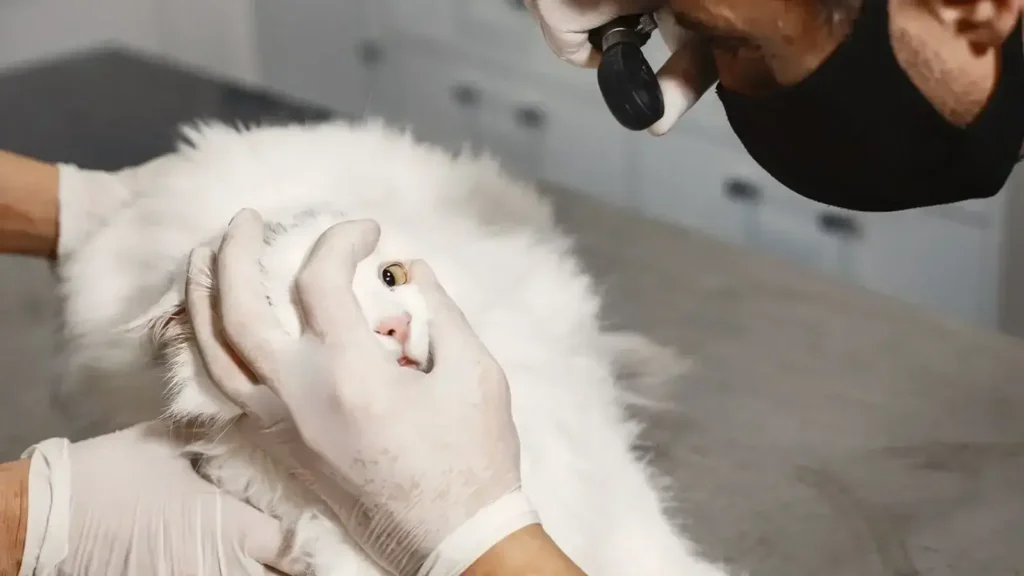
Occasional love bites are completely normal. See a vet if you notice:
- Sudden aggression that wasn’t there before
- Deep bites that break the skin
- Bleeding after a bite
- A noticeable personality change
- Eating problems alongside the behavior
PetMD notes that while love bites are a normal and often charming part of feline behavior, any bite that breaks the skin should be washed immediately and evaluated, since cat bites carry a real risk of infection.
Frequently Asked Questions
Why do cats lick then bite you?
It’s usually a mix of affection, grooming instinct, play, or mild overstimulation, all of which are normal cat behaviors.
Why does my cat bite me after licking me?
Often it’s a gentle love bite, a signal that petting has gone on long enough, or an invitation to play.
Do cat licks mean kisses?
In a sense, yes. Licking is one of the clearest signs of trust and affection in cat communication.
Does my cat trust me if it bites me?
A soft, controlled bite actually shows trust, since your cat has full control over how hard they bite and is choosing to hold back.
Why does my cat lick me then bite me while purring?
It usually means they’re happy and relaxed, though the bite can mean the sensation became slightly too much.
Why does my cat grab my hand and bite me gently?
This is often playful hunting behavior, sometimes paired with bunny kicking, and is best redirected toward a toy.
Is licking then biting normal?
Yes, in most cats this is a normal part of affectionate and playful communication.
Can I train my cat to stop?
Yes. Short petting sessions, toy redirection, and rewarding calm behavior can reduce or eliminate unwanted biting over time.
Final Thoughts
So, why do cats lick you then bite you? In almost every case, it’s a normal part of how cats show affection, invite play, or tell you they’ve had enough attention for now. Learning your cat’s specific signals, tail flicks, ear position, body tension, makes it much easier to enjoy the licks and avoid the bites.
If the behavior ever becomes sudden, intense, or paired with other symptoms, a quick check in with your vet is always the safest choice.
For more on understanding your cat’s everyday behavior, take a look at Why Does My Cat Lick Me.
Also Read
Cat Behavior
Why Does My Cat Sleep on My Chest
Why Does My Cat Keep Headbutting Me
Signs Your Cat Actually Loves You
Cat Care
Cat Care Guide for Beginners
Indoor Cat Care Guide
Author Bio
David Jason
Founder, My Pet Care Tips
David Jason is the founder of My Pet Care Tips, a website dedicated to helping everyday pet owners care for their dogs and cats with practical, easy to follow advice. He works closely with veterinary sources and trusted animal health organizations to keep every article accurate, current, and genuinely useful for beginner pet parents.