Can cats cry? Cats can produce real tears, but they do not appear to shed emotional tears because they feel sad in the way people do. If you notice wet streaks on your cat’s face, the cause is more likely irritation, an eye condition, or a problem with tear drainage. Cats also make crying sounds, such as meows and yowls, to communicate needs or discomfort. Knowing the difference can help you decide what your cat needs and when to call a veterinarian.
Quick Answer: Can Cats Cry?
Yes, cats produce tears to keep their eyes moist and protected. However, current veterinary guidance does not support the idea that cats shed tears as an emotional response to sadness like humans do. A cat with watery eyes may have irritation, infection, an injury, or a tear-duct problem. A cat that cries out with meows or yowls may be hungry, stressed, seeking attention, or experiencing pain.
- Watery eyes: Usually a physical eye or tear-drainage issue, not proof of sadness.
- Crying sounds: Vocal communication that can have behavioral or medical causes.
- Sudden changes: New tearing, squinting, discharge, or unusual vocalization deserve veterinary attention.
Can Cats Cry Tears When They Are Sad?
Cats can experience emotional states such as fear, stress, frustration, and contentment, but they do not show those feelings by shedding emotional tears in the way people commonly do. A cat may look sad while sitting quietly with watery eyes, but the two things happening at the same time do not prove that the tears came from sadness.
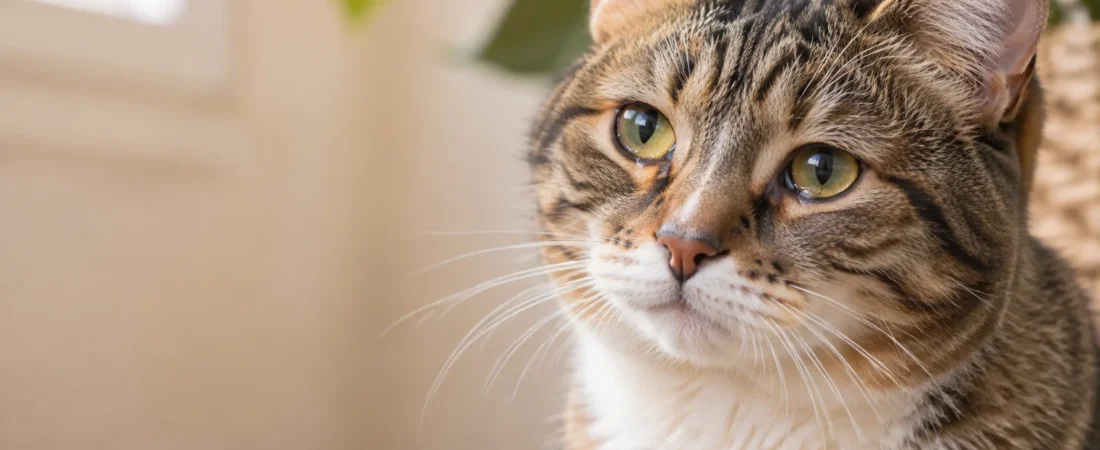
Cat tears have a practical job. Tear glands produce fluid that helps lubricate the surface of the eye, protect it, and wash away small particles. The tears normally drain through tiny openings and the nasolacrimal ducts toward the nose. If that system becomes irritated or blocked, fluid can overflow and run down the face.
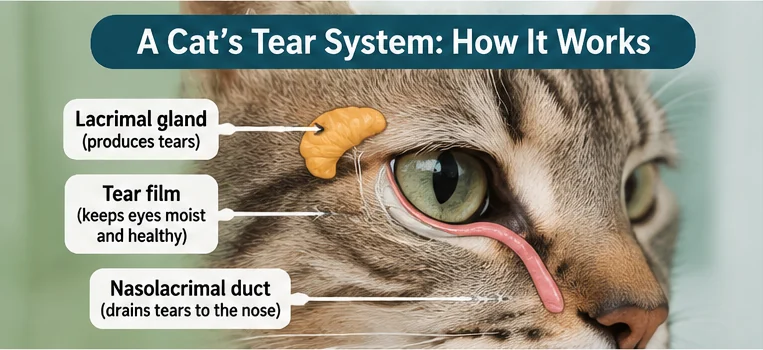
So, if you are asking whether cats can cry real tears, the accurate answer is that they can physically produce tears, but visible tearing is not a reliable sign of emotional sadness. It is better to look at your cat’s overall behavior and eye health rather than assume what the tears mean.
Why Are My Cat’s Eyes Watering?
Watery eyes in cats are also called epiphora when tears overflow because too much fluid is being produced or normal drainage is not working properly. Several conditions can cause this. Some are mild, while others need prompt treatment because eye problems can become painful and may threaten vision.
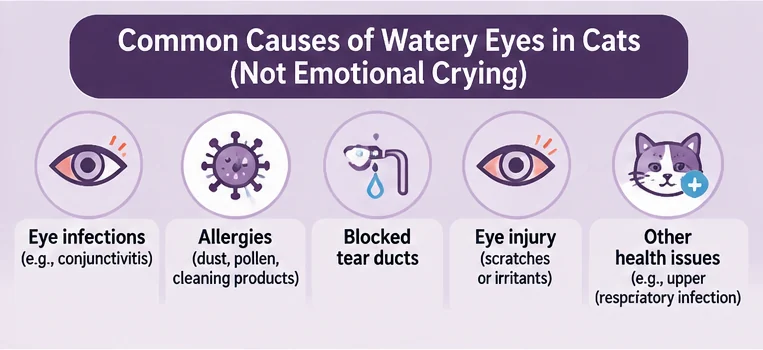
1. Dust, Smoke, or Another Eye Irritant
Dust, smoke, strong fragrances, cleaning sprays, and tiny pieces of debris can irritate the delicate surface of a cat’s eye. The eye may respond by producing extra tears to help flush the irritant away. If the watering stops quickly and your cat is otherwise comfortable, it may have been temporary. Persistent tearing, redness, or squinting should not be ignored.
2. Conjunctivitis or an Eye Infection
Conjunctivitis is inflammation of the thin tissue around the eye. It can cause watering, redness, swelling, blinking, and discharge. Some cats also develop sneezing or nasal discharge when an upper respiratory infection is involved. Discharge may be clear, cloudy, yellow, or green, but its appearance alone cannot identify the cause. A veterinarian can examine the eye and decide whether testing or medication is needed.
3. A Scratch, Corneal Ulcer, or Foreign Object
A scratch on the cornea, a small object trapped near the eye, or another injury can trigger significant tearing. Your cat may blink repeatedly, squint, paw at the face, hide, or keep the affected eye partly or fully closed. Eye injuries can be painful and should be checked urgently. Do not try to remove something that appears stuck to the eye or put medication in the eye without veterinary direction.
4. Blocked Tear Ducts
Tears normally drain through the nasolacrimal duct system. If a duct is blocked or narrowed, tears may spill over the lower eyelid and leave damp fur or dark tear staining. Some cats have anatomy that makes drainage problems more likely. Persian and Himalayan cats, for example, are more prone to certain tear-drainage issues because of their facial structure. Persistent staining or watering still deserves a veterinary check rather than being dismissed as normal for the breed.
5. Eyelid or Eyelash Problems
An eyelid that rolls inward, lashes that rub against the eye, or an eyelid that does not sit normally can irritate the eye surface. This may lead to repeated tearing, discomfort, and sometimes corneal damage. These problems need an examination because the right treatment depends on the specific cause.
6. Allergies or Other Eye Conditions
Environmental sensitivities can contribute to eye irritation in some cats. Other conditions, including dry eye and certain inflammatory problems, may also affect the tear film. Dry eye can seem confusing because an abnormal tear film may be accompanied by discharge or irritation rather than healthy-looking moisture. A veterinarian can distinguish these conditions during an eye examination.
Can Cats Cry When They Are in Pain?
Cats do not appear to shed emotional tears as a response to pain, but an eye injury or irritation can cause reflex tearing. That is a physical response from the eye, not evidence that your cat is crying emotionally. Pain elsewhere in the body may show up in different ways, including hiding, reduced appetite, less grooming, reluctance to jump, unusual posture, or a change in normal activity.
Some cats vocalize when they are uncomfortable, but many hide pain rather than crying out. Do not wait for loud meowing before taking a behavior change seriously. If your cat suddenly becomes withdrawn, stops eating, reacts when touched, or moves differently, contact your veterinarian. You can also read our guide to why a cat may stop eating for other warning signs that need attention.
How Do Cats Show Sadness or Emotional Distress?
Because cats cannot tell us exactly how they feel, owners have to look for changes in behavior and consider what has happened in the cat’s environment. A cat that seems less interested in normal activities may be stressed, frightened, unwell, or in pain. These signs do not diagnose sadness on their own, but they are useful clues that something has changed.
- Hiding more than usual: Your cat may spend extra time under furniture or avoid familiar people.
- Changes in appetite: Eating less, refusing food, or suddenly eating differently can signal a health or stress issue.
- Less grooming: A cat that stops keeping its coat clean may be unwell or uncomfortable.
- Different social behavior: Your cat may become unusually withdrawn, clingy, irritable, or less interested in play.
- Changes in sleep or activity: Sleeping much more, pacing, or losing interest in normal routines can be a warning sign.
- More vocalization: Repeated meowing, yowling, or moaning may be communication, stress, or a sign of discomfort.
Look at the whole pattern rather than one behavior. If several changes happen together, note when they started and whether anything in your cat’s environment has changed.
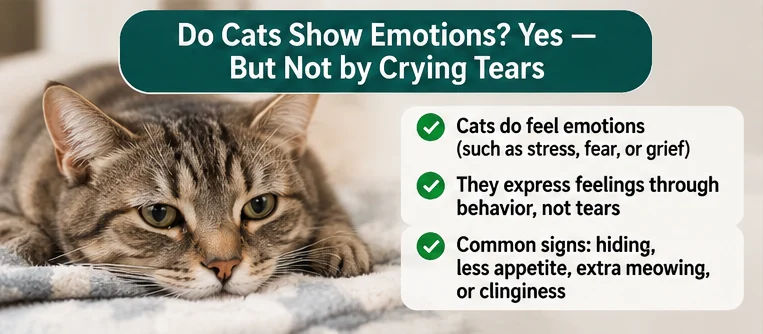
If the change is sudden, persistent, or accompanied by physical symptoms, arrange a veterinary assessment. For more on interpreting everyday feline behavior, see our guide to common cat behavior problems and solutions.
Can Cats Understand When You Cry?
Cats can notice some human emotional cues. A small 2020 study involving 10 cats found that they could match some human and cat facial expressions with the related vocal sounds. This suggests cats can respond to emotional signals, but it does not show that they understand human tears or know exactly why a person is crying.
Your cat may approach, sit nearby, rub against you, or simply stay in the same room when you are upset. It may be responding to your voice, posture, facial expression, routine, or the attention it has learned to associate with you. Some cats move closer, while others prefer to give their person space. Both responses can be normal for that individual cat.
In other words, cats may respond to changes in your behavior, but there is not enough evidence to say that they understand tears themselves or deliberately comfort every crying person.
Why Does My Cat Cry or Meow So Much?
People often use the word crying to describe a cat’s sounds. A cat may meow, yowl, howl, chirp, or make a low moaning sound. These vocalizations can communicate hunger, a request for attention, frustration, mating behavior, stress, or discomfort. The meaning depends on the sound, the situation, your cat’s age, and whether the behavior is new.
If your cat has suddenly started vocalizing more than usual, first check for changes in appetite, drinking, movement, litter-box habits, and general behavior. Do not assume that repeated crying is simply attention-seeking. A new or persistent change deserves veterinary advice. For a deeper explanation of vocal behavior, read Why Won’t My Cat Stop Meowing?
Why Does My Cat Cry at Night?
Nighttime meowing or yowling can happen because a cat is bored, wants attention, is hungry, or is responding to activity outside. An unneutered cat may also call loudly when seeking a mate. Older cats sometimes become more vocal at night when they feel confused or disoriented, and pain or another health problem can also change their usual vocal habits.
Try keeping feeding times consistent, offering an active play session before bedtime, and making sure fresh water and a clean litter box are easy to reach. Do not punish a cat for vocalizing. If the nighttime crying is new, frequent, unusually intense, or comes with changes in appetite, thirst, mobility, or litter-box habits, arrange a veterinary check—especially for a senior cat.
When Should You Take a Cat With Watery Eyes to the Vet?
Contact your veterinarian if your cat’s eyes keep watering, the problem returns, or you notice discharge or a change in how the eye looks. Seek urgent veterinary care if your cat has a painful or closed eye, significant swelling, a cloudy-looking eye, a suspected scratch or injury, or repeated pawing at the eye. Eye problems can worsen quickly, so do not wait several days to see whether a painful eye improves on its own.
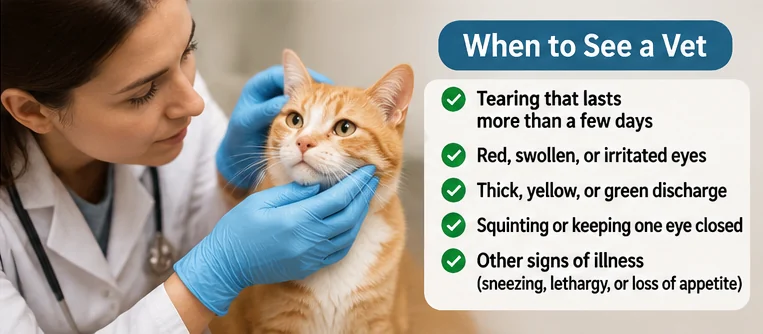
Arrange prompt veterinary advice if watery eyes occur with sneezing, nasal discharge, reduced appetite, unusual tiredness, or other signs of illness. If your cat seems severely unwell or has suffered an obvious eye injury, use an emergency veterinary service.
What to Do While You Arrange Veterinary Advice
- Note when the watering started and whether one or both eyes are affected.
- Take a clear photo or short video to show the veterinarian how the eye looks at home.
- Keep your cat indoors and away from smoke, dust, sprays, and other obvious irritants.
- If discharge is on the fur, gently wipe around the eye with clean, damp gauze. Do not press on the eyeball or try to remove anything stuck to it.
- Do not use human eye drops, leftover pet medication, or home remedies unless your veterinarian tells you to.
- Watch for squinting, redness, swelling, changes in appetite, sneezing, or unusual behavior.
These steps can help you observe the problem, but they do not replace an eye examination or treatment when one is needed.
Frequently Asked Questions
Can cats cry real tears?
Yes, cats produce real tears to lubricate and protect their eyes. Visible tears are generally linked to a physical eye or drainage issue, not emotional sadness.
Can cats cry when they are sad?
Cats can experience emotional states, but they are not known to shed tears because they feel sad. They may show changes in behavior, appetite, grooming, or vocalization instead.
Can cats cry from pain?
Pain or irritation involving the eye can trigger reflex tears. Pain elsewhere may cause hiding, reduced appetite, changes in movement, or vocalization rather than emotional tears.
Why does my cat have one watery eye?
One watery eye may be caused by a local irritant, scratch, infection, or tear-drainage problem. Persistent watering, squinting, redness, or discharge should be checked by a veterinarian.
Can cats tell when their owners are crying?
Cats can respond to human voices, facial expressions, and other emotional cues. Research does not establish that they understand tears themselves or always recognize crying as sadness.
Why does my cat cry at night?
Nighttime crying may be linked to boredom, attention-seeking, mating behavior, stress, pain, or confusion in older cats. A sudden or persistent change should be discussed with a veterinarian.
Final Thoughts
So, can cats cry? They can produce tears, but watery eyes usually point to a physical cause rather than an emotional one. Cats communicate feelings and needs through body language, behavior, and vocal sounds, so it is important to notice what changes around the same time as the crying.
If your cat has persistent watery eyes, squinting, discharge, or a sudden change in behavior, contact a veterinarian instead of assuming the problem is sadness. Paying attention to those early signs can help you protect your cat’s comfort and eye health.
Sources and Further Reading
- Merck Veterinary Manual: Disorders of the Nasal Cavity and Tear Ducts in Cats
- VCA Animal Hospitals: Eye Discharge (Epiphora) in Cats
- American Animal Hospital Association: Recognizing Pain in Cats
- Emotion Recognition in Cats: Research published in Animals (2020)
- Cats Protection: Why Do Cats Cry?
Editorial Information
My Pet Care Tips Editorial Team. This article is for general educational purposes and is not a veterinary diagnosis. It has been prepared using veterinary reference materials and published research. It has not been individually reviewed by a veterinarian. Consult a licensed veterinarian about new, persistent, or concerning symptoms.