
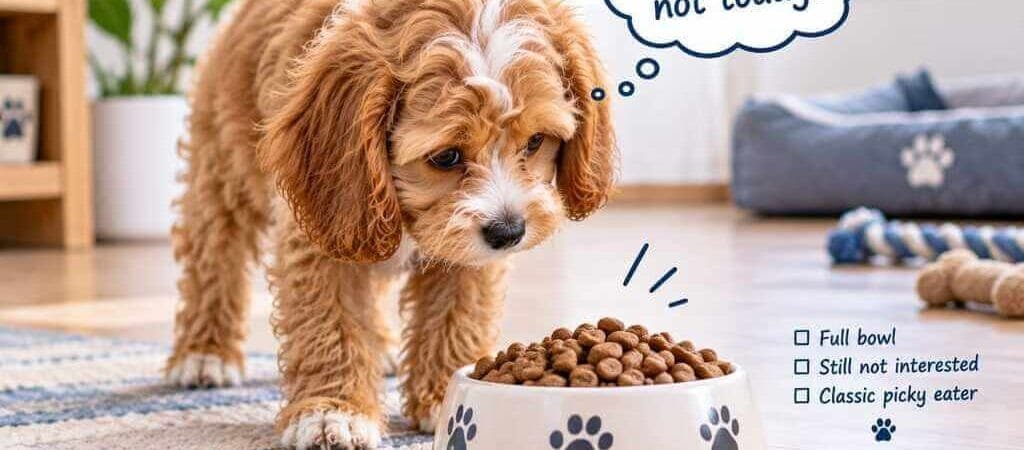
Your puppy sniffs the bowl. They walk away. Ten minutes later, the kibble is still sitting there untouched. If your puppy won’t eat kibble, you are not alone, and the fix is usually simpler than you think.
Most picky eating is a habit, not a health problem. The good news is that habits can be changed with the right approach.
Quick answer: Most puppies who refuse kibble are reacting to inconsistent feeding routines, too much food variety, or distractions at mealtime. Setting a strict schedule, removing uneaten food after 20 minutes, and adding simple toppers usually solves the problem within a week or two. Rule out illness first if your puppy skips meals for more than 24 hours.
Why Won’t My Puppy Eat Kibble?
Puppies rarely reject food without a reason. The most common cause is simple. Owners accidentally teach puppies to hold out for something better.
Offering constant variety, table scraps, or a new food every time your puppy skips a meal sends a clear message. Wait long enough, and something tastier will show up. Your puppy learns fast. This becomes a repeating cycle.
Is This Normal, or Should I Worry?
A little pickiness now and then is normal. Timing matters more than the behavior itself.
For puppies, 24 hours without eating is the general cutoff before you should call your vet. Puppies have smaller energy reserves than adult dogs. They cannot safely skip meals for as long. If your puppy seems otherwise playful and energetic, mild pickiness is probably just a habit. If they seem lethargic, are vomiting, or show any other symptoms alongside the food refusal, skip the home remedies and call your vet right away.
7 Tips to Get Your Picky Puppy to Eat Kibble
Try these strategies in order. Most puppies respond within a week of consistent effort.
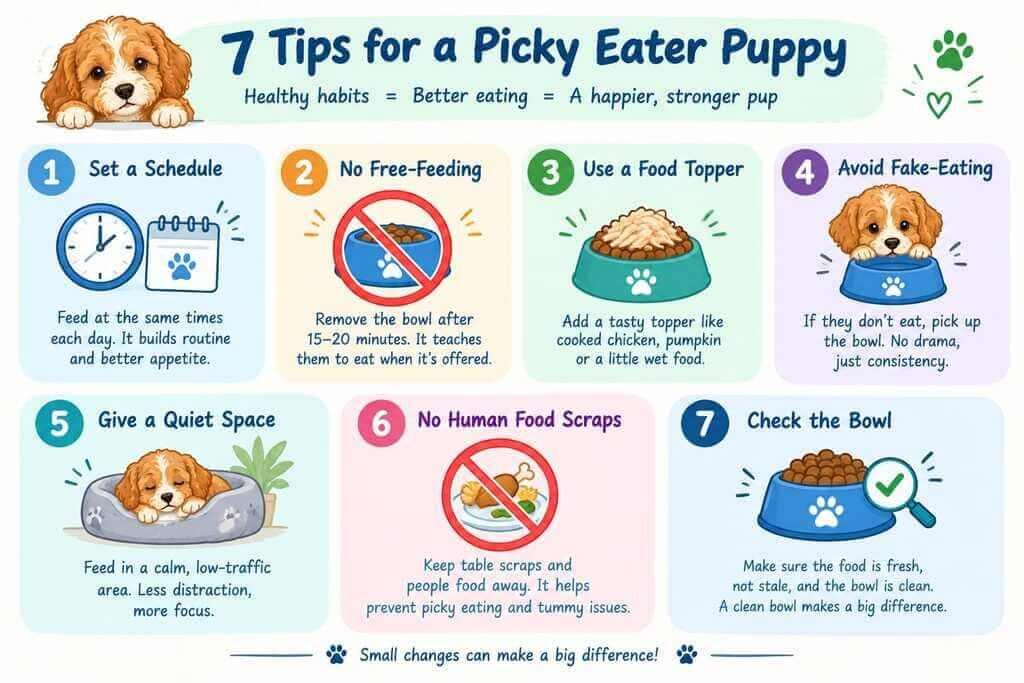
1. Set a Strict Feeding Schedule
Offer kibble at the same times every day. Leave the bowl down for 20 minutes. If your puppy does not eat, pick the bowl up and wait until the next scheduled meal. This teaches your puppy that food will not always be available on demand.
2. Stop Free-Feeding
Leaving kibble out all day removes the incentive to eat during actual mealtimes. Switch to scheduled meals only. This single change resolves a surprising number of picky eating cases on its own.
3. Add a Simple Topper
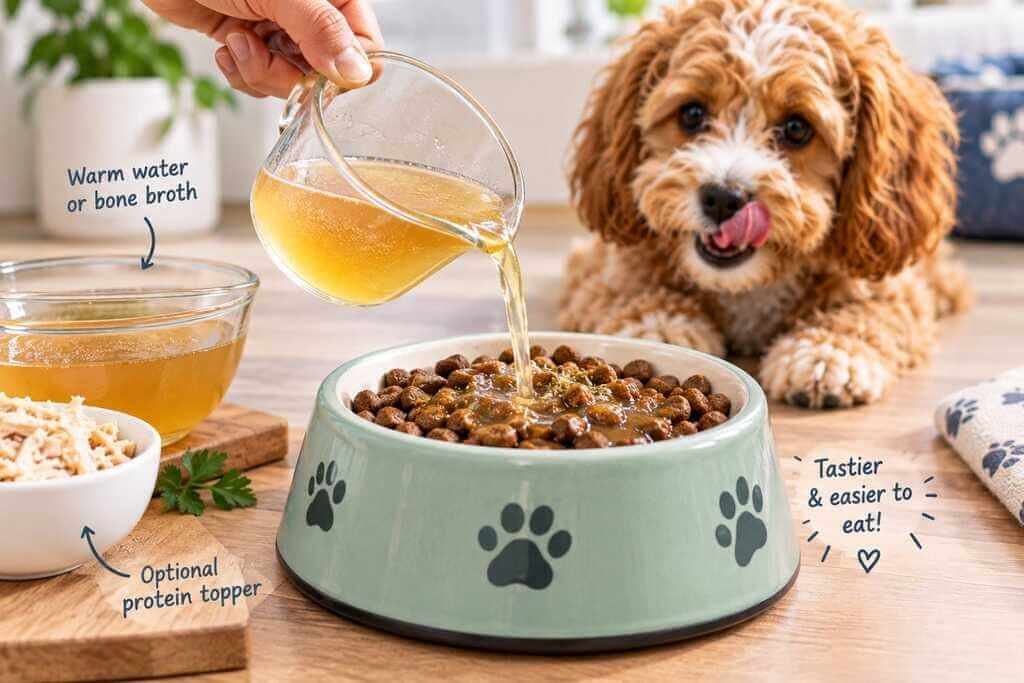
A small amount of warm water, low-sodium bone broth, or plain pumpkin puree can make dry kibble more appealing. The added moisture and aroma often does the trick. Keep portions small so the topper enhances the meal rather than replacing it.
4. Try the “Fake Eating” Trick
This sounds strange, but it works for many puppies. Sit near the bowl. Pretend to eat a piece of kibble yourself, then offer your puppy a single piece by hand. Repeat a few times. Many puppies get curious and dig in once they think they are missing out on something good.
5. Reduce Mealtime Distractions
A busy, noisy environment can make some puppies too anxious or distracted to eat. Try feeding in a quiet room away from foot traffic, other pets, or loud household noise. Some puppies simply need a calmer space to focus on their food.
6. Cut Out Table Scraps
Table scraps and constant treats train your puppy to expect better options than their regular food. Stick to kibble and approved training treats only, and give the rest of the household the same instructions. One person sneaking snacks undoes everyone else’s consistency.
7. Check the Bowl and Environment
Some puppies struggle with certain bowl shapes, especially flat-faced breeds who have trouble scooping food from a deep bowl. A shallow, wide bowl sometimes makes a bigger difference than any change to the food itself.
When Picky Eating Might Be a Health Issue
Most cases of a puppy who won’t eat kibble come down to habit, not illness. A few signs point to something more serious.
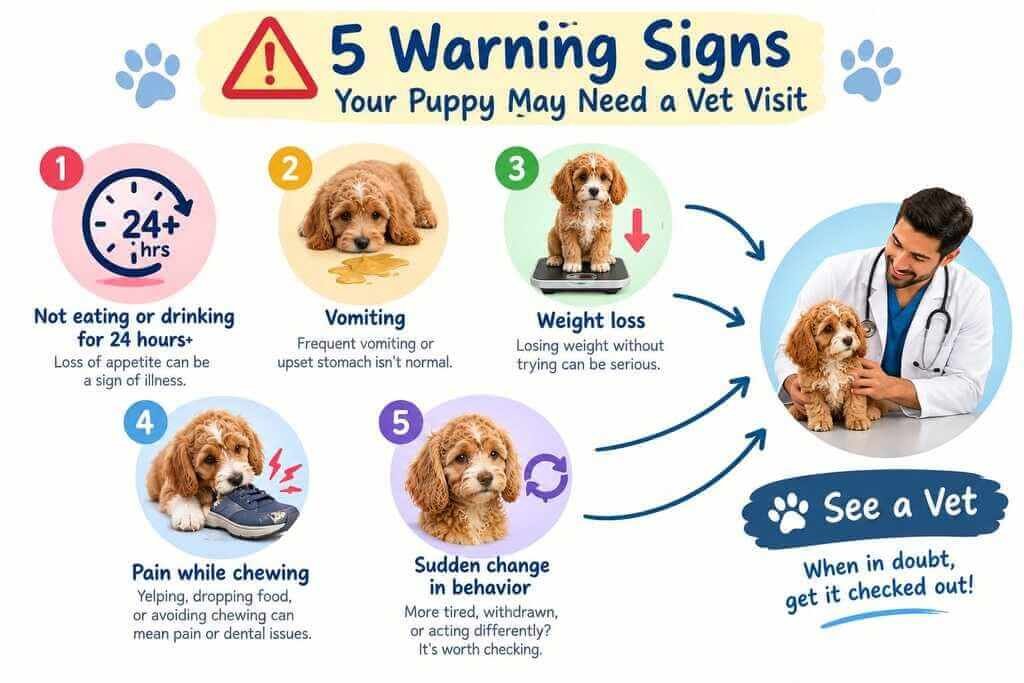
- Refusing food for more than 24 hours
- Vomiting, diarrhea, or visible discomfort
- Sudden weight loss or noticeably low energy
- Pain or hesitation when chewing
- A sudden change after previously eating well without issue
The American Kennel Club recommends consulting your veterinarian before making major diet changes, especially if your puppy has recently stopped eating something they always ate before. The VCA Animal Hospitals notes that dental issues, digestive problems, and stress can all cause a sudden loss of appetite, so ruling out a medical cause matters before assuming your puppy is simply being picky.
What Not to Do When Your Puppy Won’t Eat Kibble
A few common reactions tend to make picky eating worse instead of better.
- Do not switch foods every time your puppy refuses a meal. This reinforces the exact behavior you are trying to stop.
- Do not hand-feed every meal long-term. Occasional encouragement is fine, but permanent hand-feeding creates a new dependency.
- Do not panic after one skipped meal. A single missed meal in an otherwise healthy puppy is rarely an emergency.
- Do not add so many toppers that kibble becomes optional. The goal is enhancing the food, not replacing it entirely.

Frequently Asked Questions
Why does my puppy refuse to eat kibble but eat treats?
This usually means your puppy has learned that holding out gets them something better. Treats and table scraps taste more exciting than plain kibble, which reinforces picky behavior over time.
How long can a puppy go without eating before it’s an emergency?
Around 24 hours is the general cutoff for puppies. Call your vet if your puppy refuses food for longer than that, especially if other symptoms are present.
Should I switch my puppy to wet food if they won’t eat kibble?
Not right away. Try consistency and scheduled feeding first. Switching foods every time your puppy refuses a meal often makes picky eating worse in the long run.
Is it normal for puppies to be picky eaters?
Occasional pickiness is common and often behavioral. Consistent refusal paired with other symptoms is worth a vet visit rather than assuming it is just a phase.
What can I add to kibble to make it more appealing?
Warm water, low-sodium bone broth, and plain pumpkin puree are simple, popular options that add moisture and aroma without replacing the kibble itself.
Can stress cause a puppy to stop eating?
Yes. Anxiety, loud noises, or a busy environment during mealtime can cause some puppies to skip meals, even when nothing is medically wrong.
Final Takeaway
Most cases of a puppy won’t eat kibble situation come down to a fixable habit rather than a health problem. A consistent schedule, a simple topper, and cutting out table scraps solve the majority of picky eating within a week or two.
If mealtime struggles are part of a bigger adjustment period, our How to Take Care of a Puppy guide covers the broader basics of the first few months home. Our general guide to Common Pet Health Problems is worth a look if you suspect something beyond simple pickiness.
Author Bio
David Jason is the founder of My Pet Care Tips. He writes practical, research based guides to help pet owners raise healthier, happier dogs and cats. His content focuses on clear, beginner friendly advice backed by trusted veterinary resources and real world pet care best practices.